Nadijah Robinson’s Residency – Week 2 Blog Post

Toronto-based artist Nadijah Robinson shares her second blog post about her Fresh Milk residency. She shares some of the struggles she has been having this past week, including beginning to reconcile feelings of longing for the Caribbean and displacement she has felt living in Canada with the reality of being in Barbados, and how this will manifest in her work. Read more below:
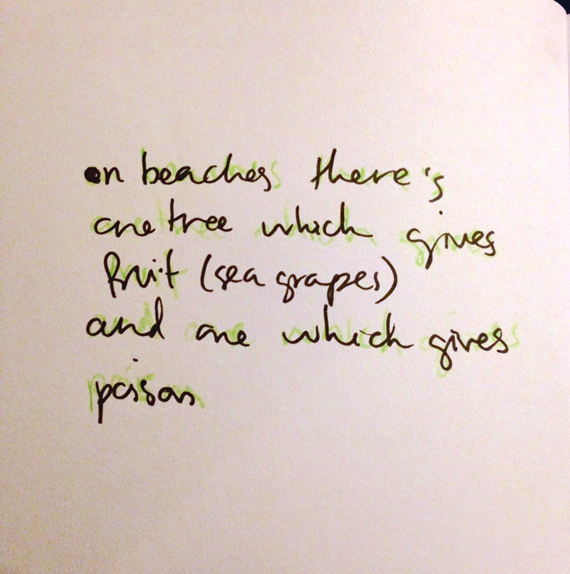
wk2_1

Unsettled. This week I got the flu. The week flew by, being on a few different cold and flu medicines and an antihistamine, much of it is a blur of trying to maintain a normal schedule, rest, stay hydrated and hope that it wasn’t dengue fever or chikungunya that I caught.

I’m starting to get homesick, which is an interesting feeling to get here. Homesickness is such a familiar feeling to get in Toronto, to long for a place that feels more affirming of your culture and identities, and feels safe and nourishing. As a second generation immigrant, sometimes that feeling is a cosmic joke. Plane tickets cannot take you to such a mythical destination. This longing is what much of my art centers on, along with the ever-present anti-black racism that is a part of my every day. More on that later.

I started making work. In a bit of a frustrated state at losing momentum due to being a human being vulnerable to viruses and attractive to mosquitoes, I decided to just start on something. I’m not sure what it is yet, but it is a collage/painting mixed media work.

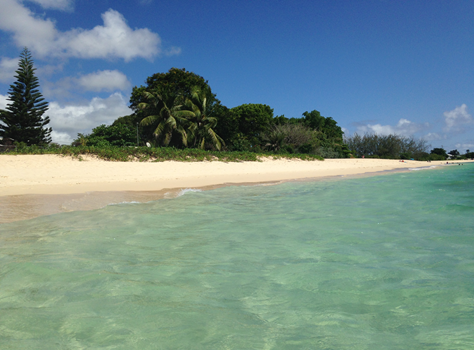
I’m becoming aware of how much time there is left, that I am half way through my residency at Fresh Milk, and that I am two weeks closer to having to return to the beginning of winter in Toronto. This realization has me putting the pressure on in terms of making work, and doing research, but also getting down to the business of going to the beach. Not to mention that I was recommended the remedy of taking a sea bath by more than a few people. Rayanne and I spent this Saturday at the very calm Brandon’s Beach, which proved to me that Barbados is a blessed place. The water’s so warm; until now I had assumed that my distant memories of warm natural waters were something I’d invented, as every river and lake I’ve dipped my feet into in Ontario has left my feet numb.
wk2_2

This week, I’ve been struggling with how the stark difference of my surroundings here is producing ideas and themes for me that don’t directly relate to my context in Toronto. I worry (a bit) about producing work that will be an exception in my wider art practice. But at the core of this is the guilt that I’m not feeling the same level of urgency around my own and my people’s survival. I am still constantly receiving updates and new news about murders and police killings via social media, but no one around me is reacting. As Toronto heads into the coldest/hardest season, and as Canada heads into an extremely scary federal election on Monday, I’m at the beach and in the studio. It feels unfair. But this is something I’m currently trying to reconcile, allowing myself the space and time to focus on making work that is genuine, un-rushed, and about whatever it needs to be about.

wk2_3

_______________________________________

2014 OAC logo RGB JPG

This residency is supported by the Ontario Arts Council.
Ronald Williams shares a statement about ‘Alpha’

There has been some recent media coverage in the Nation Newspaper in Barbados surrounding a public art piece by local artist Ronald Williams, which was commissioned by Fresh Milk and Adopt A Stop as part of their collaborative Fresh Stops project.

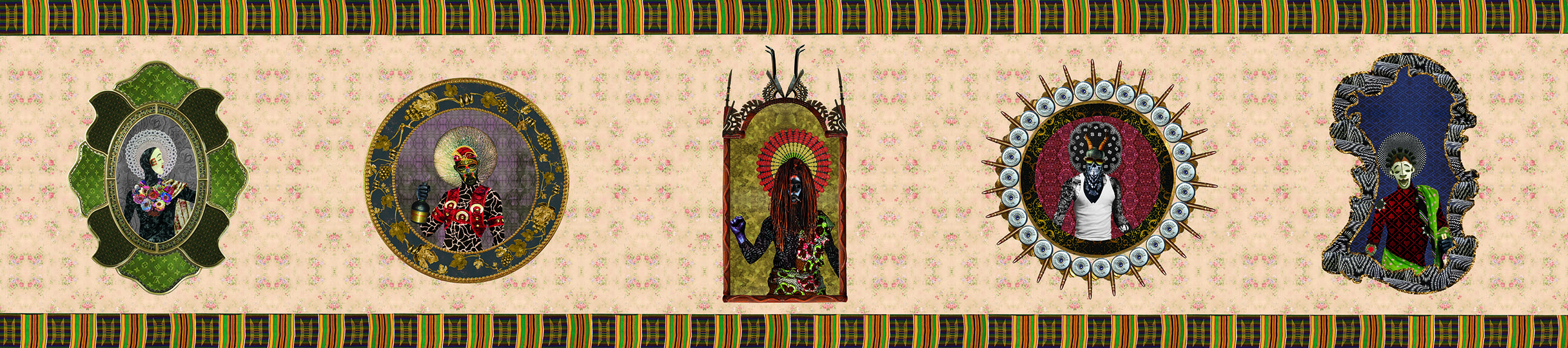
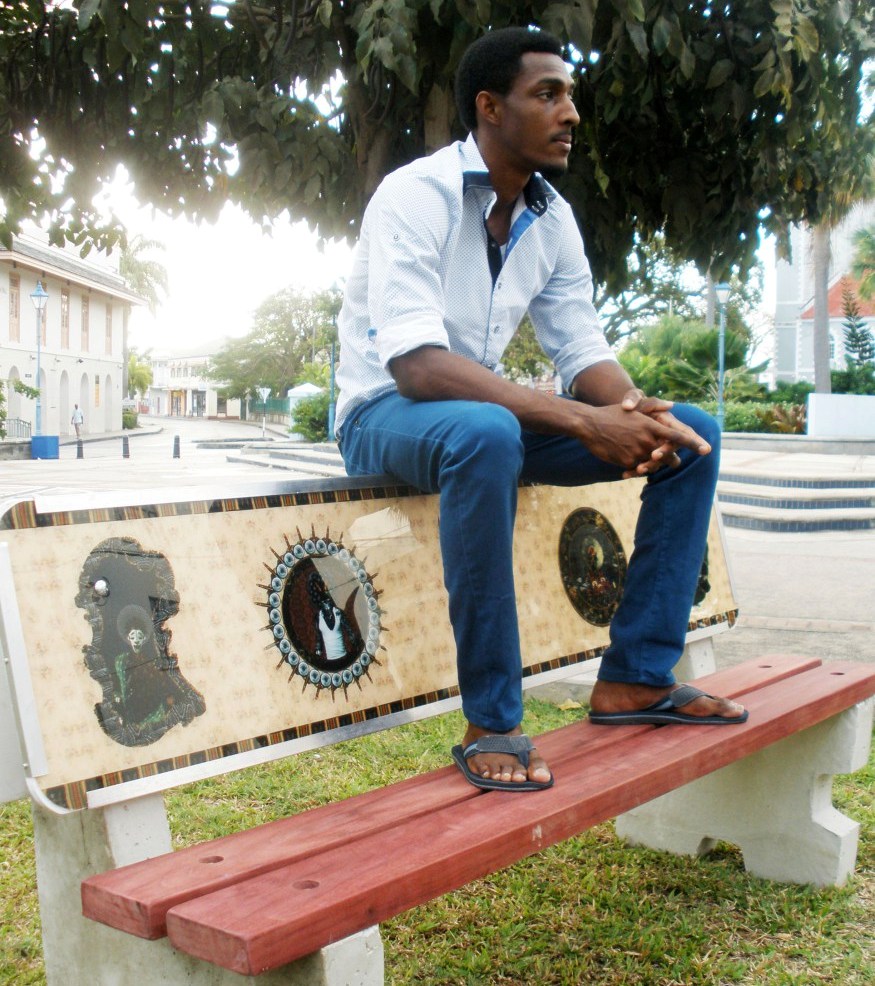
Fresh Milk is very pleased to be able to share a comprehensive statement by Ronald about his artwork entitled Alpha, which can be seen on a bench in Independence Square, Bridgetown. Alpha combines imagery and references from contemporary black culture, based on the artist’s own observations from everyday life, with classic figures from Greek mythology to challenge Western standards of beauty.

We are proud to be supporting Ronald’s thought provoking work, and hope that the attention it is receiving will lead to further dialogue and understanding about contemporary art, its role in society and its value for our culture and environment.

Ronald Williams with his bench entitled 'Alpha'

Ronald Williams with his bench entitled ‘Alpha’

Alpha attempts to question traditionally dominant Western beauty standards. It injects a black consciousness alongside, and at times instead of, the established images found in Classical Greek, Renaissance and Baroque eras.

In appropriating the revered iconography from these eras, I sought to challenge the Western ideals which are so dominant in our culture and mind-sets. The characters are based on five of the Olympians from Greek Mythology (tales which were dominant in my own psyche as those were the first stories I remember really liking as a child).

While I removed the mythical Greek icons from their pedestals, the aim was to also critically investigate black culture and present a Barbadian/Caribbean existence in a new light. Therefore, I used ordinary people and mundane personalities as my inspiration. As a result the five characters take the form of the pretty boy, the party animal, the conscious one, the bad boy and the trickster.

The work, viewed as a collective, reflects African, European and East Asian influences, highlighting that even though we are a predominantly black county/region, it is the intermingling of these various cultures which has caused the Caribbean to be a unique space.

Apollo - Detail of 'Alpha' by Ronald Williams

Apollo – Detail of ‘Alpha’ by Ronald Williams

Apollo, described as the most beautiful Olympian and a ‘God’ of the arts, becomes the pretty boy. He is the personification of modern male fashion, which often goes beyond metrosexual and into effeminate/homosexual realms. The character sports a white face on a black body, highlighting the skin bleaching phenomenon (seen as a beautification process), which is prevalent in the black population in the Caribbean.

Dionysus - Detail of 'Alpha' by Ronald Williams

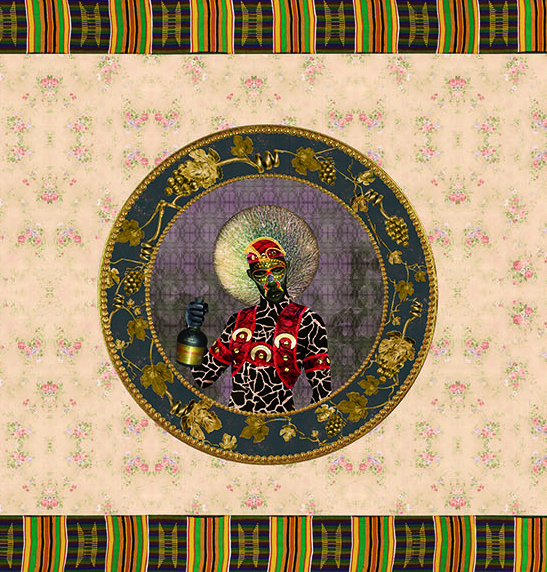
Dionysus – Detail of ‘Alpha’ by Ronald Williams

Dionysus, the ‘God’ of alcohol, drunken revelry and ecstasy is the party animal. Dressed as a Kadooment/Carnival masquerader holding a bottle of brandy and set against a smoky marijuana background, the character appears intoxicated and moody. The piece as a whole aims to underline the use of controlled substances when we ‘play mas’ or celebrate, while it simultaneously hints at the darker mood swings which can be a side effect of drug abuse.

Zeus - Detail of 'Alpha' by Ronald Williams

Zeus – Detail of ‘Alpha’ by Ronald Williams

Zeus, the supreme Olympian, takes the role of the conscious/spiritual one. He represents a state of serenity and oneness (an ideal level of consciousness many religious/spiritual teachings uphold that one should strive for). His modest natural wood frame (in comparison to the other metallic embellished frames) symbolizes a sense of purity and an immaterial view of the world.

Ares - Detail of 'Alpha' by Ronald Williams

Ares – Detail of ‘Alpha’ by Ronald Williams

‘God’ of war Ares naturally becomes the ‘bad’ boy. The aim of this piece is to exude an aggressive, violent vibe. The character’s ‘tattoos’, made from graffiti, his skull scarf and his horned mask all help to paint the picture of a sinister ‘gangsta’, while the red scarf background and the frame made from bullets sell the idea of a dangerous yet strangely glamorous lifestyle many from poor ‘ghettos’ seem to aspire to.

Hermes - Detail of 'Alpha' by Ronald Williams

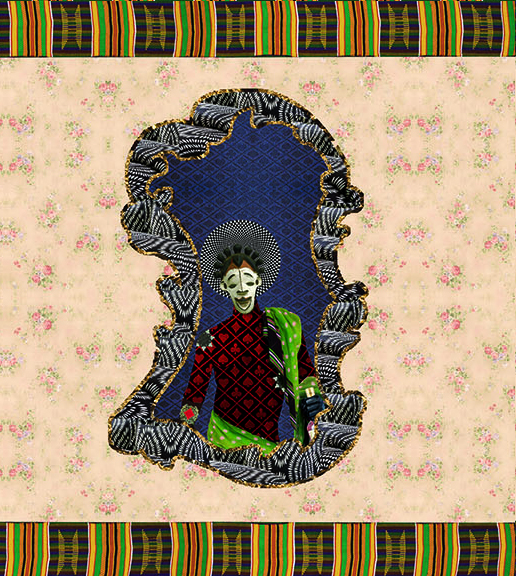
Hermes – Detail of ‘Alpha’ by Ronald Williams

Hermes, the mischievous ‘God’ of trade, thieves and wanderers is the trickster. He has a clownish appearance, but the background of optical illusions and card suits indicate that there is some level of deception and gamesmanship involved. While Apollo haughtily wears his white mask, Hermes insincerely revels in his. He is the personification of a role many in the black population (Caribbean and worldwide) feel is necessary to play; a conformity to a dominant white culture.

Ronald Williams, Alpha, 2015

Ronald Williams, Alpha, 2015

Thank you to Ronald for sharing his work, to Adopt A Stop for entering into this partnership with us, and to all of the artists participating in the Fresh Stops project. You can learn more about their pieces here.

Alice Yard announces the results of their inaugural Prize for Art Writing

alice yard prize winners

From L-R: Winner Stephen Narain (Bahamas) and Honourable Mentions Nicole Smythe-Johnson (Jamaica) and Katherine Kennedy (Barbados)

The co-directors of Alice Yard are pleased to announce that the winner of the inaugural Alice Yard Prize for Art Writing is Stephen Narain, born in the Bahamas and now living in the United States.

From the shortlist of five writers, two more have been selected for honourable mention: Katherine Kennedy of Barbados and Nicole Smythe-Johnson of Jamaica.

The other shortlisted writers are Brandon O’Brien of Trinidad and Tobago and Aiko Maya Roudette of St Vincent and the Grenadines.

Narain will receive a cash award of US$1,000, and his essay, along with Kennedy’s and Smythe-Johnson’s, will be published in The Caribbean Review of Books.

Launched by Alice Yard in 2014, the prize is an annual award for an original piece of critical writing on contemporary Caribbean art by a Caribbean writer aged 35 or under. It aims to encourage new writing on Caribbean art and artists, and to identify emerging voices in contemporary Caribbean art criticism. Originally it was expected that the winner of the inaugural prize would be announced in late 2014. Despite the delay in the timetable, the prize will continue to be awarded annually, and the 2015 Alice Yard Prize for Art Writing will open for entries in September.

The co-directors of Alice Yard wish to thank the 2014 prize judges — Krista Thompson, Charles Campbell, and Courtney J. Martin — for their time and critical engagement.

Read more on the Alice Yard website here.

Saada Branker and Powys Dewhurst – Week 4 Blog Post

In the last blog post about their time in Barbados, Fresh Milk‘s international writer-in-residence Saada Branker fretted about missing out on the beauty of the country. Given all that she and filmmaker Powys Dewhurst encountered in the first few weeks on the island as they diligently collected information and footage for their documentary memory project commemorating Hurricane Janet’s 60th anniversary, the obvious had escaped her. Read more about her final revelations below:

Standing on serene farmland with no beaches in sight

Standing on serene farmland with no beaches in sight

“You cannot leave Barbados without eating your mango in the sea.” I was told.

Experiencing such a rite of passage in my parents’ birthplace had me giddy. Before arriving in Barbados, I was all about the beach. I practically bragged to my Toronto girlfriends that I would interview and research everything I could find on the 1955 hurricane, but I also intended to make it out to sunbathe a couple times a week. “I’ll write daily, read, and relax on the beach,” I explained. “And I’m going to sketch—my feet in the sand and the waves rolling in.” Clearly, I was cocky in my delusion; as if there was only one place I could ground myself.

By our fourth week in the Fresh Milk residency, my ashy foot was still dry.

Truth told, on this residency, I was immersed in something deeper and more compelling than the thrill of only sun and sand. Being in landlocked St. George, I was walking in the country, divining dimensions of my environment and what it means to be touched by nature, yet humbled by our inability to control it. Case in point, the unknown series of events that resulted in a deluge of sargassum seaweed washing up along beaches in Christ Church and the East Coast —a hemorrhaging compared to what Barbados has received each year since 2011. Here was an inexplicable increase of the sea’s yield, which prompted the tourism sector to beg Mother Nature for mercy. Swimmers were wishing aloud for a quick return to the pristine beaches and crystal clear waters. Amid the frustration and near panic, the inquisitive Barbadians started asking what long-term environmental benefits could be gleaned from the endless mounds of foul-smelling seaweed. Could the sargassum help prevent soil erosion? Could it enrich agricultural soil as fertilizer?

At the start of our last week, the rain fell like currency from the sky. “Since January!” This exclamation was the outburst we’d often hear from Barbadians as they revelled in the close to a six-month dry season. For me and Powys, the first downpour dampened our mood because we had to reschedule two interviews that day. Any filming outdoors was a no-go. There were reports of flooding in certain areas, and one of our interviewees called to reschedule when her balcony accumulated too much rain water—the same spot she intended to have us set up. As the much-needed moisture soothed the scorched earth, I realized how narrow my perspective was about “good weather.” With the gift of raindrops, moods lifted. Bajans spoke of the daily drenching with appreciation. Again, I had been looking at it all wrong.

Our Hurricane Janet chase was really was about exploring these environmental gifts handed from nature along with the losses reaped. People we interviewed opened their homes to us and shared their gems. When the camera recorded, they spoke almost dutifully of childhood memories and family life, describing how Hurricane Janet fit within the layers of their experiences. After the filming, one host offered us freshly squeezed lemonade, compliments of the trees in her beloved yard. Days before leaving, we received a warm loaf of home-made coconut bread from another host. She surprised us the week earlier with the most scrumptious zucchini bread I’ve had in years. Another interviewee invited us back to her home for tea, and on that occasion she handed Powys two mangos picked from a tree in her garden.

The spirit of generosity was also present within the country’s institutions and businesses. Sitting at Barbados Government Information Service, we reviewed silent, black-and-white footage of Hurricane Janet’s aftermath. In it, forlorn Barbadians sifted through debris. I was reminded of the weakness of our constructed environment. The displaced families living in schools for weeks on end revealed a disturbing reality about the impact of a Category-3 hurricane on the economy. As Tara Inniss of UWI’s history and philosophy department explained on camera, a natural disaster like a tropical storm exposes “the deficiencies” in a country’s infrastructures. In Barbados sixty years ago, those vulnerable spots would be found in housing, fisheries and communications, especially involving hurricane preparedness.

To be standing in the sea’s rolling waves today, indulging one’s senses in the sweet juices of a much-revered fruit, is not a bad indoctrination at all. It conjures that heady spell we fall under, gazing at our environmental geography in all its beauty. Such exquisite gifts of nature often have us assuming they will always be there independent of humankind’s interference or incompetence. But times are cyclical in nature. During an economic downturn it becomes even more important to cultivate, protect and preserve our environment with the respect it deserves, and inevitably demands, as Barbados learned late September in 1955.

I did indulge in my gift of a mango picked from a yard tree. But instead of the sea, I sat eating my fruit on Fresh Milk’s studio platform minutes before we started a workshop on writing. It was my private moment to receive and give thanks. There on farmland, I got to pass my own rite—forever touched by the countryside’s warm breeze and cacophony of earthly melodies.

Our very special thanks to Andrea King, Janice Whittle, Charles Phillips, Natalie McGuire, Top Car Rentals Barbados, Barbados Government Information Service, Barbados Museum & Historical Society, Above Barbados, The National Cultural Foundation of Barbados, The University of West Indies History and Philosophy Department, Southern Rentals Barbados, St. George Parish Church, ArtsEtc, and Fresh Milk Barbados for their contributions and for facilitating our interviews during our stay.

Colección Cisneros shares the debate ‘The Tropical: Resistance or Cultural Tourism?’

Colección Patricia Phelps de Cisneros, a platform for debate concerning the immense contributions of Latin America to the world of art and culture, shares the online debate ‘The Tropical: Resistance or Cultural Tourism?‘ featuring input by Fresh Milk‘s Founding Director Annalee Davis.

Leandro Cardoso Nerefuh, Churrasco Tupinambá, 16th Century (Variable dimensions). Part of the Arquivo Banana [Banana Archive].

Leandro Cardoso Nerefuh, Churrasco Tupinambá, 16th Century (Variable dimensions). Part of the Arquivo Banana [Banana Archive].

About the debate:

The “tropical” has helped to increase visibility in the global art market for contemporary art produced in Latin America (particularly from the Caribbean, Central America, and Brazil). Its vibrant, colorful, and extravagant iconography can be easily read by a broad audience. On one hand, the tropical can empower a worldview that is different from the “western” mainstream that dominates the global art world. On the other, it can be accused of reproducing an exotic colonial gaze that has historically constructed the tropics as only a place of desire and leisure. Has the tropical become a contemporary aesthetic trend that continues to primitivize the “Other”? How has the Latin American art market boom contributed to promoting a particular form of legibility for practices made in tropical climates? Can the tropical be a useful artistic strategy today or is it condemned to banality?

Join the debate here.

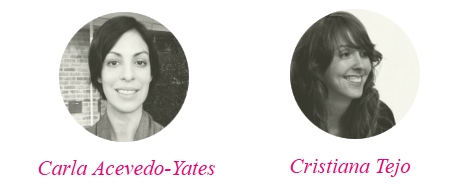
Moderators: Carla Acevedo-Yates and Cristiana Tejo carla and cristiana Participants: Mario García Torres, Moacir dos Anjos, Annalee Davis and Leandro Nerefuh

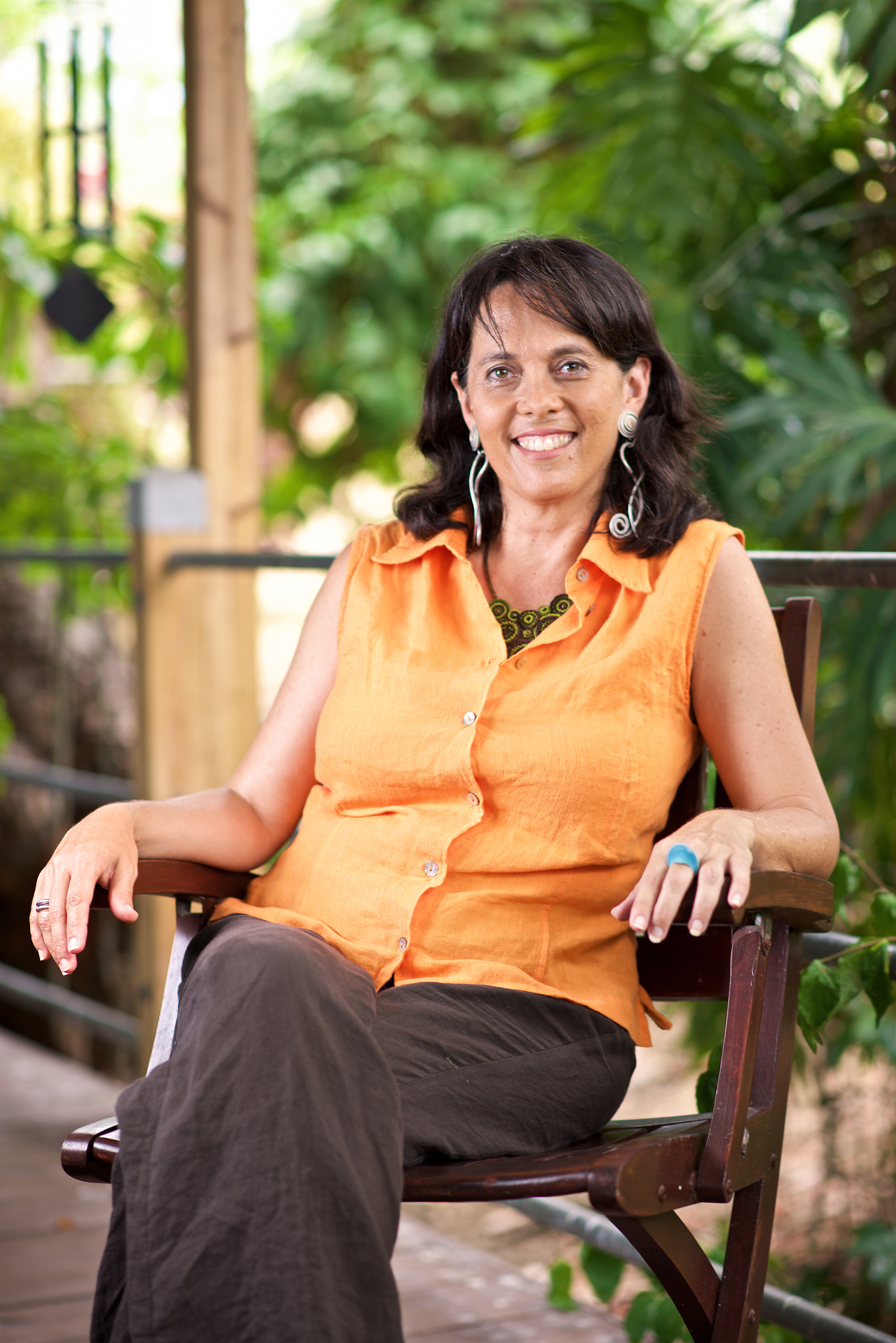
Director: Annalee Davis. Photo credit: Charles Phillips of Monochrome Media

Annalee Davis. Photo credit: Charles Phillips of Monochrome Media

About Colección Cisneros:

The Colección Cisneros website was created to offer a forum for information about, a platform for debate concerning, and a spark for the ignition of interest in the immense contributions of Latin America to the world of art and culture. The site’s inspiration and launching point is the Colección Patricia Phelps de Cisneros (CPPC), but its ambition is discovery, and its mission is to weave a multi-lingual, virtual network for people and ideas. Founded in the 1970s by Patricia Phelps de Cisneros and Gustavo A. Cisneros, the CPPC is based in New York City and Caracas. Its mission is to enhance appreciation of the diversity, sophistication, and range of art from Latin America, and to advance scholarship of Latin American art. The CPPC achieves these goals through the preservation, presentation, and study of the material culture of the Ibero-American world—ranging from the ethnographic to the contemporary.