Guest #CCF Review: Purple Hibiscus

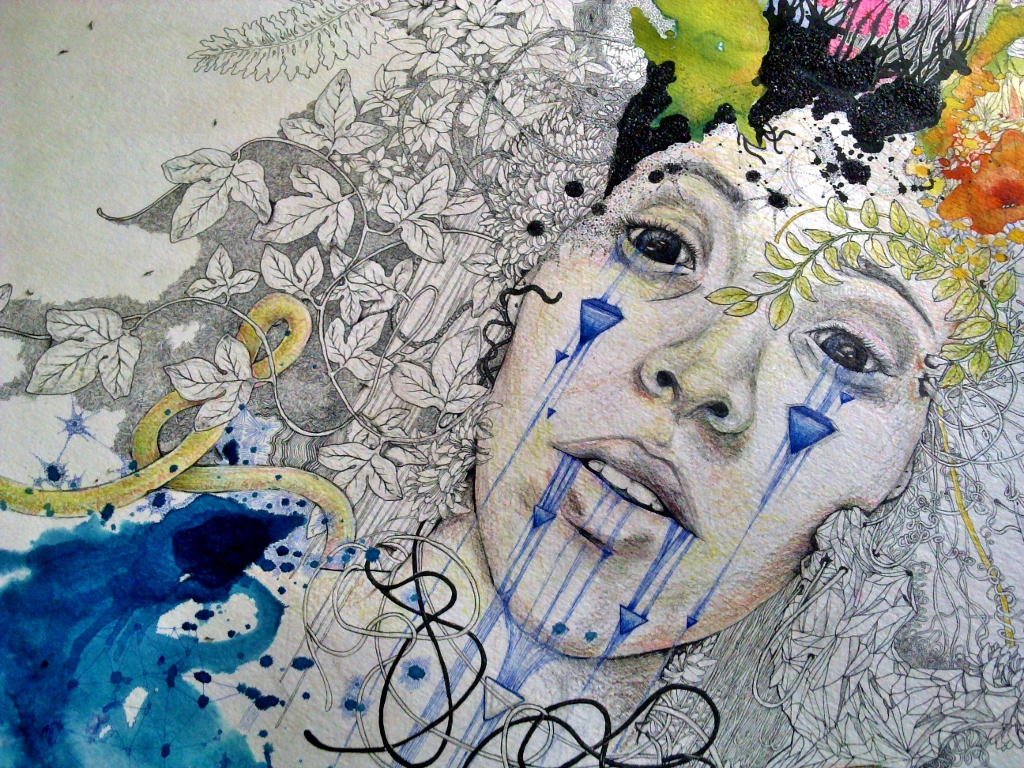
IMG_20150429_101140

Purple Hibiscus (2003) by Chimamanda Ngozi Adichie follows the story of Kambili, a young girl growing up in a strict household dominated by her father, a wealthy Catholic in post-independent Nigeria. Kambili’s father has created an isolated environment in which she, her brother Jaja, and their mother, Mama, are to live. Controlling by fear and punishment, Papa uses the severe interpretation of the Bible and Catholicism that he received in colonial Nigeria as a way to maintain order in the compound. The novel takes place during a time in Nigeria when the country is falling into civil disorder.

The above excerpt is from our recent resident artist Jordan Clarke’s guest review of Purple Hibiscus by Chimamanda Ngozi Adichiethis week’s addition to the Fresh Milk Books Tumblr – the online space inviting interaction with our collection in the Colleen Lewis Reading Room.

For new Critical. Creative. Fresh reviews, look out for our #CCF responses and see the great material we have available at Fresh Milk!

Halcyon Macleod and Willoh S. Weiland’s Residency – Week 1 Blog Post

Current artists in the Fresh Milk International Residency Programme, Willoh S. Weiland and Halcyon Macleod, share their first blog post reflecting on the beginning of their time in Barbados. Written this week by Halcyon, we are given some insight into the origins of their collaborative project ‘Crawl Me Blood’, a sound installation inspired by Jean Rhys’ novel Wide Sargasso Sea, and how they are using their time at Fresh Milk to collect material and expand the piece. Read more below, and for information on how to get involved with ‘Crawl Me Blood’, click here. 

IMG_6353

I arrived in Barbados on Sunday afternoon after a whopping forty-seven hours of continuous transit with my three month old baby strapped to my front. Flights were delayed, flights were cancelled, connections were missed. When the luggage conveyor belt at Grantley Adams International Airport emptied and stopped and I was the last one standing there, it felt only right that yes, my suitcases and the baby’s cot were lost in transit. It really is a long way to come, from my home in Hobart Tasmania, the heart-shaped island at the bottom of Australia, to this warm, colourful and utterly compelling island of Barbados. I was met at the airport by  my collaborator, Belizean-Australian artist Willoh S. Weiland, who had made a similar journey from Melbourne with her boyfriend and 10 month old babe the week before. Why have we come all this way?

In a 1959 letter, whilst she was working on Wide Sargasso Sea, Rhys described her earlier novel, Voyage in the Dark, as expressing how “The West Indies started knocking at my heart.” She added that “the knocking has never stopped.”
– from The Cambridge introduction to Jean Rhys by Elaine Savory

IMG_8369

The writings of Jean Rhys and our families’ connections to this region have compelled and propelled Willoh and me across the globe and far from home more than once now. The germ of our current project Crawl Me Blood, took hold in 2011. We landed in Los Angeles and drove across the country to The University of Tulsa where the Jean Rhys Special Collection is housed. There in Oklahoma, is the unlikely home of a collection of Rhys’ correspondence, drafts, unpublished writings, a few personal effects and a touching recording of the author singing songs from her childhood in Dominican Patois. Our journey continued to Placencia, Belize, the village where Willoh was born and grew up, and then on to Black River, in the St. Elizabeth Parish, Jamaica, the origins of my Grandmothers family. Certainly, the Caribbean was knocking at our hearts. We had begun our research for a new Australian interdisciplinary arts project.

But Crawl Me Blood is not about us! Inspired by the Belizean Kriol phrase ‘what crawls your blood’ are the secrets you sense but are not told to you. This phrase is akin to saying ‘it gave me the shivers’. The Crawl Me Blood project reimagines the sinister eden of the tropical garden and draws on the medium of radio to explore the myths we make of paradise and the realities of living in some of the world’s most beautiful places.

Crawl Me Blood is a radio docu-drama which will be housed inside an immersive installation. Audiences will wander through the installation listening to the audio work via hand held radios which are tuned to pick up a localised FM radio broadcast – the Crawl Me Blood radio station. There are multiple transmitters and the audience wanders in and out of the range of each transmitter, creating an exciting compositional range for the creators of the work. This one month residency at Fresh Milk is a research and writing phase of creative development. We are conducting interviews with Bajan women of all ages, collecting field recordings from local sites and writing the text for the fiction elements of this layered audio work.

The audio work will be enriched by field recordings collected from the Caribbean region and will be intercut with carefully selected Caribbean music and readings from Jean Rhys’ Wide Sargasso Sea and Voyage in the Dark. These various components of the work are being developed alongside each other with a shared focus on the central themes of the work:

  • how do we imagine and romanticise the landscape of paradise, and how is this imaginary world destroyed by the realities of place?
  • the experience of women of all colours in the island nations of the Caribbean and in the countries that they migrate to
  • the responses that the tropical landscape and climate generate in people

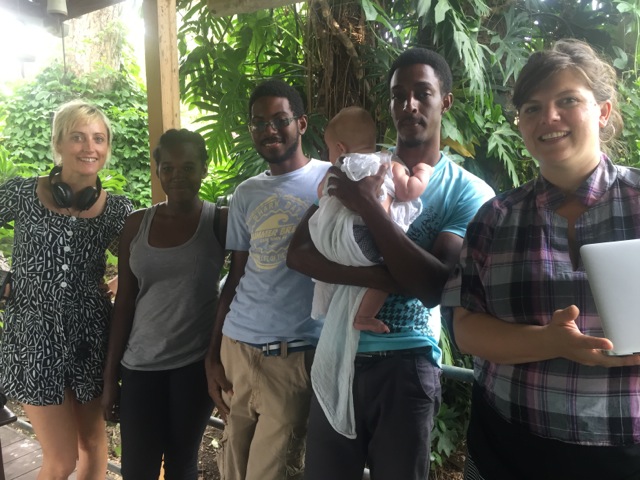
Members of the Fresh Milk Books team with Willoh, Halcyon and little Raphaela.

It has been an incredibly productive start due to the ground work that Willoh was able to do in the previous week, and thanks to the assistance of the Fresh Milk Team in connecting us with amazing people. It has been our privilege to meet and interview some inspiring Bajan women. We have talked with a visual artist, a theatre practitioner, a poet and activist who have generously shared their perspectives with us. We have also interviewed Jamaican-Australian artist Zahra Newman this week in Melbourne via Skype. On Tuesday, we met with the Fresh Milk Books team and heard all about their reviews drawn from the Fresh Milk collection in the Colleen Lewis Reading Room. One of the team had recently reviewed Wide Sargasso Sea! We look forward to continuing the conversations and learning more about Bajan art and artists through our interviews and the collection.

A big thank you to Annalee and the Fresh Milk Team for making us feel welcome and introducing us to some inspiring Bajan artists this week.

This residency is supported in part by the Australian Broadcasting CorporationThe Alcorso Foundation and Arts Tasmania.

Simone Asia’s Residency: Week 2 Blog Post

Simone Asia, current artist in Fresh Milk’s 2015 ‘My Time’ Local Residency programme, shares her second blog post. Continuing her exploration of nature, Simone has managed to begin some of her new ideas – despite a few surprises along the way – and in addition to colour, she is also playing with materials and processes during her residency. Read more below: 

3

Another week of the residency has passed and this one was very hectic. Yes, I started the portrait, but I did not get as much done as I would have liked due to a very busy schedule. Most days I got on site in the afternoons which only allowed me four or five hours to work as opposed to the seven or nine I did most days last week.

Nonetheless this week was interesting. My two phones have been restored and I sourced an old iPod nano to occupy my ears with music and thus quieten my thoughts. Yes, I’m back with the technology, but I will say I paid little attention to them and focused more on the natural elements around me. I did a couple more experimental drawings and reflected on what happened last week to gather inspiration for the portrait. I also explored the land for textures and patterns in nature and observed the happenings on the farm with my two furry pals Rico and Mica. On my breaks they would accompany me while I relaxed and gathered my thoughts.

I had a couple of frights this week – I was attacked by bats when I was leaving Fresh Milk on Wednesday.  I think they were trying to intimidate me by flying at my face. On Friday, I nearly sliced opened my face with a retractable box cutter trying to renew the blade. They never mention these hazards in the instructions for awkward people like me.

04242015706

This week, my attention was shifted to the animals like the bats, a lizard who I named Komodo because of his large size, the local visitors – the troop of green monkeys who would pass through on afternoons looking for food and swinging on trees (I am afraid of monkeys so these visits were usually uncomfortable), the birds – especially the dove who always tries to build a nest inside the Colleen Lewis Reading Room, and the cows.

I got to see the cows being brought out from the milking stations to the fields. It may not sound like much but I thought it was a spectacular sight. I watched as the herd with their heavy udders huddled and strolled down the path. A flock of egrets flew out of nowhere, seeming to accompany them. I watched this majestic sight in awe because I have never seen anything like it. I have not seen Bambee this week. I wonder if she is avoiding me, or has she noticed me yet?

Over the weekend I bought some more art materials. Since I have started the portrait, I am now eager to try out collages; not full blown collages, just minimal ones for now. This week, even though I did not spend as much time as I would like, I still managed to write down a few ideas there.

‘A thought on Mediating Matter(s) in Arab and Caribbean Contemporary Art’ by Natalie McGuire

Fresh Milk board member and contributor Natalie McGuire shares a review of the recent exhibition The Place of Silence at the Stal Gallery, Oman. While this show featured work by Middle Eastern artists, McGuire parallels their work with that coming out of the Caribbean, particularly between Iraqi-British artist Estabrak Al-Ansari and regional artists Nadia Huggins and James Cooper, all of whom deal with the materiality and implications of water as a medium. Read more below: 
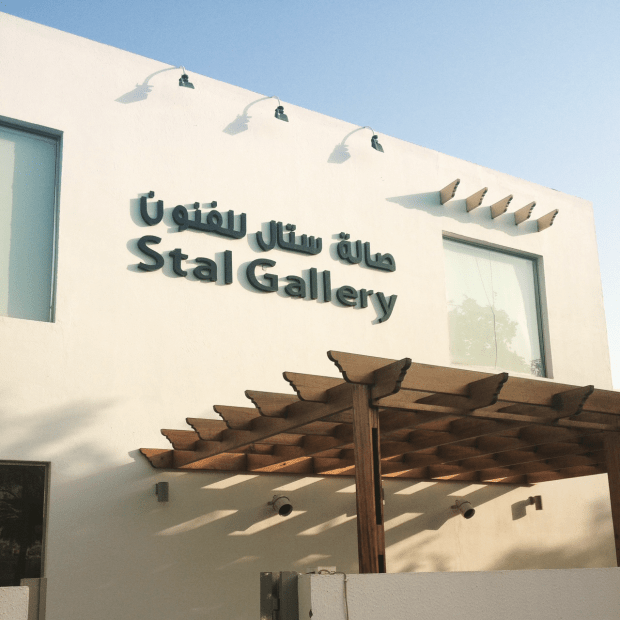
Stal Gallery, Muscat, Oman. Photo credit: Natalie McGuire.

Stal Gallery, Muscat, Oman. Photo credit: Natalie McGuire.

Not work, taut, deaf, monotonous as a sea, endlessly sculpted—but
eruptions yielding to earth’s effervescence—that expose the heart, beyond
worry anguishes, to a stridency of beaches—always dislocated, always
recovered, and beyond completion—not works but matter itself through
which the work navigates—attached to and quickly discarded by some
plan—first cries, innocent rumors, tired forms—untimely witnesses to this
endeavor—perfectly fusing as their imperfections meet—persuading one to
stop at the uncertain—that which trembles, wavers, and ceaselessly
becomes—like a devastated land—scattered.

– Edouard Glissant, Poem for the World

Standing in the Stal Gallery, Muscat, in March 2015, the exhibition The Place of Silence exhumed an atmosphere so familiar to that of Caribbean art spaces. The works of six Middle Eastern artists commanded attention in the three enclave-spaced gallery, saturated in context and concepts that brought to mind Glissant’s phrase: “Not works, but matter itself through which the work navigates.” From Dada-inspired installations reviewing existence and death (Raiya Al Rawahi’s Life, Being and Death) to an unearthing of self-reflection, a photographic self-portrait mirrored and repeated almost to geometric abstraction (Ahmed Al Mullahi’s Gazing Through the Divine), there were challenging thoughts and narratives seeping through every pore of the walls. The exhibition was physically navigating through the matter of an upscale avenue in the heart of the city, sitting on Al Inshirah Street, a British Council Service Road.

Raiya Al Rawahi,  Life, Being and Death (detail). Installation: photographs, IV bags/stands, headphones, charts. Stal Gallery, 2015.

Raiya Al Rawahi, Life, Being and Death (detail). Installation: photographs, IV bags/stands, headphones, charts. Stal Gallery, 2015.

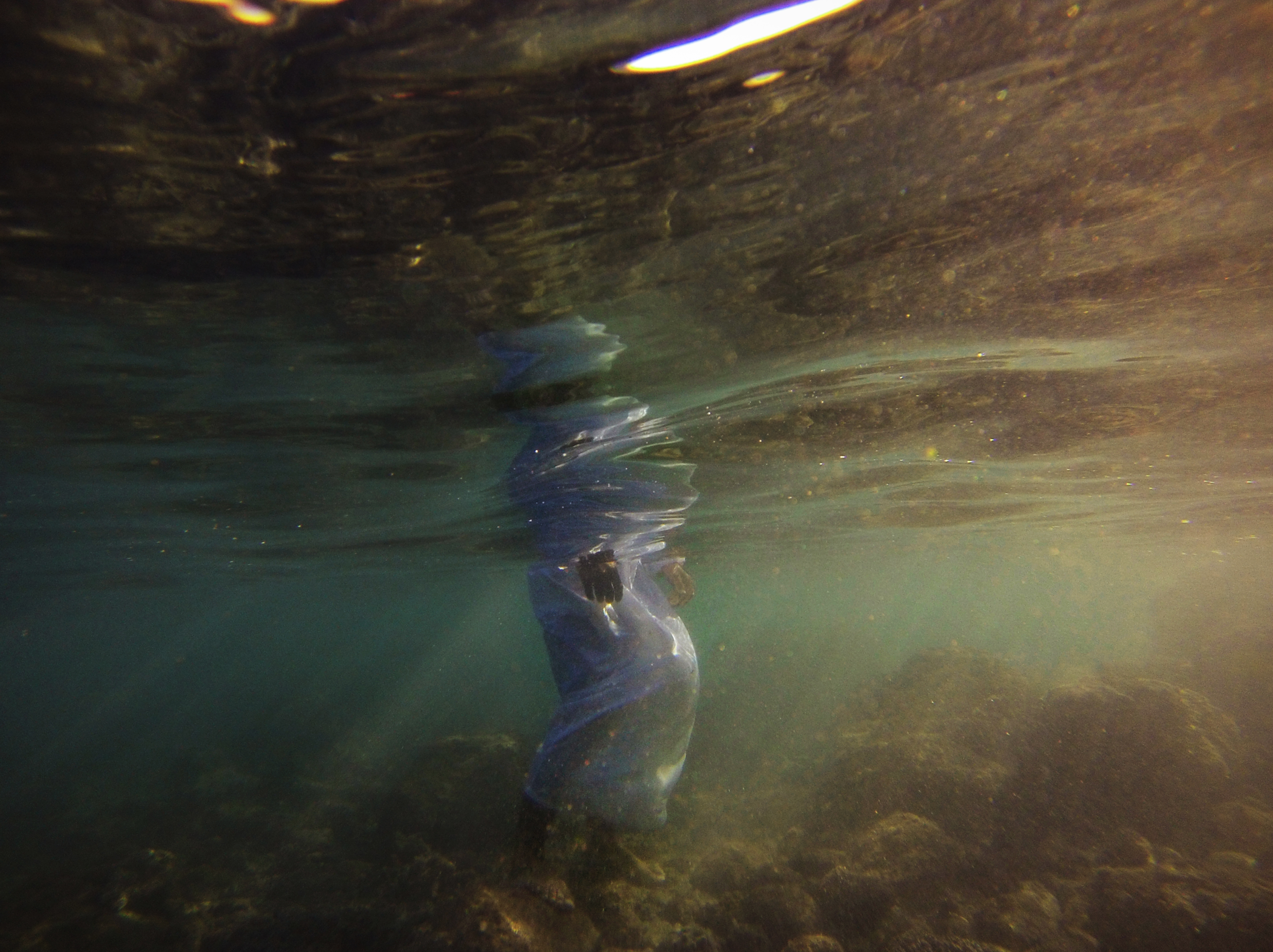
One in particular was the piece Sayed, a component of the series ‘Omani’s Under Water’, by Estabrak Al-Ansari, an Iraqi-British new media artist and filmmaker, who is currently at the centre of a surging movement in Omani contemporary art. The photograph depicts an underwater view of half the figure of an Omani man in his dishdasha, submerged and poised on the reef. The white gown plays with being transparent in the sunlight that penetrates the water, and clings to the backs of his legs and lower torso. In the accompanying wall text, Al-Ansari emphasized her exploration of “taboo concepts such as sexuality, privilege, oppression, power and understanding.” By having the body of her subject submerged in water, in this realm of nature that becomes somewhat abstracted from the landscape of society, she can unpack the restraints around its presentation and movement. Implementing her concepts ‘under the surface’, the discourse she wishes to raise is mediated by this matter. For Sayed, no conservative Omani could accuse Al-Ansari of presenting him in an immodest manner; it was a natural reflection of the current of the ocean she photographed him in. She later stated, “I might direct a person, an image with my camera, but natural elements like water take over, and the element of the water plays with what I want to convey.”

Estabrak Al-Ansari, ‘Sayed’, Omani’s Under Water. Limited Edition Photographic Prints, Stal Gallery, 2015.

Estabrak Al-Ansari, ‘Sayed’, Omani’s Under Water. Limited Edition Photographic Prints, Stal Gallery, 2015.

I had a chance to visit Al-Ansari at her sea-front studio in Al Bustan, and as she shared with me her thoughts about functioning in a Middle Eastern creative space, the familiarity of her new found artistic community with that of my own Caribbean one was undeniable.

Being her first exhibition in Oman, Al-Ansari believed some movements of the body encompassing a relationship with the sea would be acceptable for display outside of the water. At the opening of The Place of Silence, she presented her live projection painting piece Djinn and Motion. She explained:

Djinn is huge here. It’s in the Qur’an and states that Djinn do exist, it is like the ‘other’, a spiritual world. In countries there can be voodoo, and in Oman there is a big history of that. One reason why the title Djinn and Motion came to me is because I live by the sea within the mountains…and I have friends who refuse to visit me, because the belief is that the Djinn prefer to chill out by the sea, especially at night. Whether or not you believe in it is irrelevant, to me this is all myth and story, and this is the part I enjoy, that has been translated in all of my work.

Live projection painting originated in Al-Ansari’s London work with the group Thre3 Strokes, and stemmed from a desire to connect oneself and one’s viewers with an alternate space of reality. And although response to the medium was positive, the Muscat-based audience had difficulty accepting the title Djinn and Motion. Al-Ansari elaborates, “I had an interview with a guy from one of the newspapers here who was fine with discussing Omani’s Under Water, but as soon as I talked about Djinn and Motion he refused to talk to me, he walked away. He didn’t want anything to do with it. It was weird because for me, I was just normalizing what is here and what people talk about.”

Continue reading

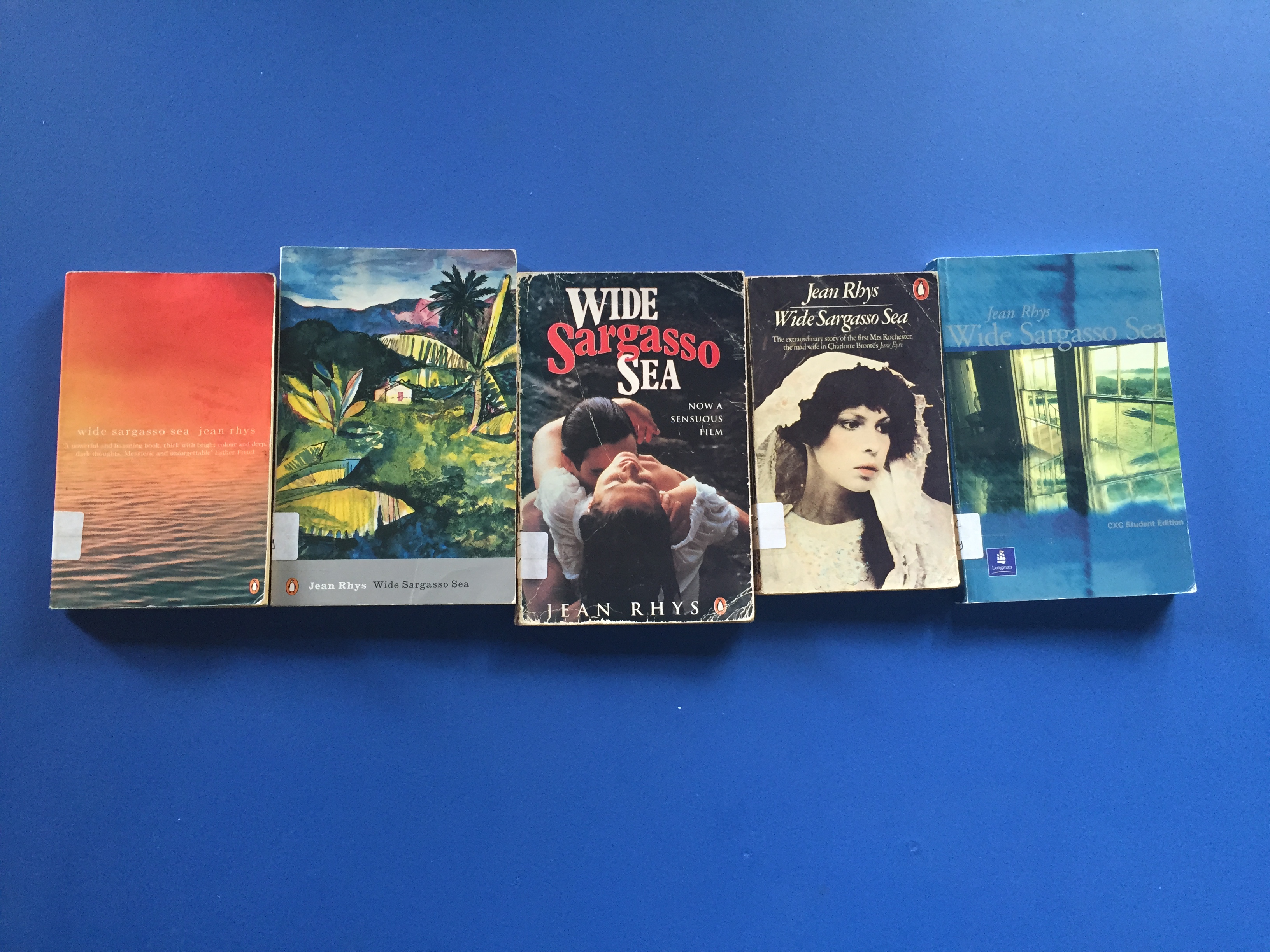
Wide Sargasso Sea: Can you be insane if you are alone? – #CCF

wss

…Antoinette’s childhood directly informed her troubles later in life, whether it was the rejection by her cold-hearted mother who was only attached to her brother, the constant abandonment by her close friends and family (most of whom used her for personal gain) or the anger of the local people and her status as a pariah. This exclusion only led to further isolation in her mind.

In many ways, Rhys has shaped loneliness within these characters as a ‘getaway’ from reality, so much so that Antoinette would ignore the surrounding world and became intolerant towards people. This alienation, compounded by acts of betrayal, causes Antoinette’s personality to twist. Her issues followed her to her stay at the convent, continuing to chip away at her sanity…

The above excerpt is from Tristan Alleyne’s review of Wide Sargasso Sea by Jean Rhysthis week’s addition to the Fresh Milk Books Tumblr – the online space inviting interaction with our collection in the Colleen Lewis Reading Room.

Fresh Milk is also currently hosting Australian resident artists of Caribbean extraction Willoh S. Weiland and Halcyon Macleod. They will be with us between April 20 – May 23, 2015 working on their collaborative project ‘Crawl Me Blood’, a sound installation inspired by Wide Sargasso Sea. For more information about their project, click here.

For new Critical. Creative. Fresh reviews, look out for our #CCF responses and see the great material we have available at Fresh Milk!