Sonia Farmer’s Residency – Week 1 Blog Post

One of Fresh Milk‘s residents for the month of March, Bahamian artist and writer Sonia Farmer, shares her first blog post. Arriving in Barbados at a time in her life when several things are shifting, this residency marks the beginning of  a number of new journeys, including her recent acceptance into the MFA programme in Book Arts at the University of Iowa for later this year. Her first week also kicked off The Art of the Book workshop, which Sonia is leading each Friday during her stay. Read more below:

What a joy to finally be in Barbados, and how quickly this first week has breezed by in a whirlwind of new faces and places. When I applied to the International Residency opportunity almost six months ago, I was in a strange place: frustrated and defeated by events out of my control at the disastrous hotel development Baha Mar, and overall uninspired and lacking in the drive to pick up and start over. All I knew was that I wanted to change my context and find inspiration again, so I applied to the open call at Fresh Milk; designed a several month odyssey to visit Book Arts Centers across the United States; and put my hat in the ring for an MFA in Book Arts at the University of Iowa—all things I had always wanted to pursue, but found circumstances contradictory to taking those steps. Rock bottom is a great foundation for building the life you want, and I’m glad I found the courage and support to pick up the sledgehammer. Because here I am, finally in Barbados, the first leg of the next chapter in my creative life, with an exciting schedule of travel to look forward to afterwards, and finally, acceptance into the graduate program of my dreams just three days ago.

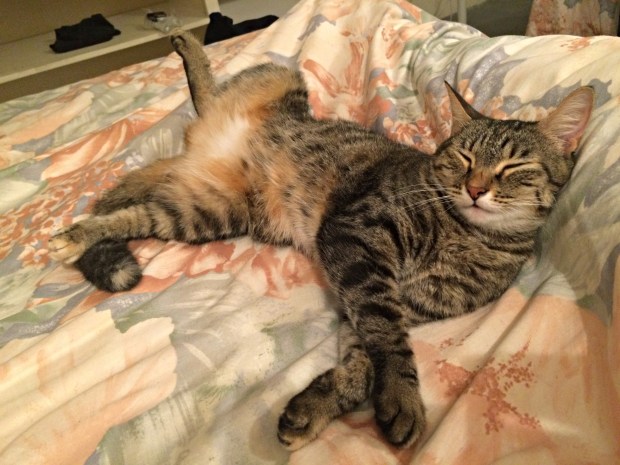
Fresh Milk is a true blessing.  I already feel as though I have been made new. Every morning I enjoy my coffee outside while I work on my artist pages, listen to the sounds of the farm, and enjoy cuddles from resident cat Tiger or dog Rudy. Then I head to the breezy studio and work on one of several writing projects at a cheerful blue desk, or surrounded by books in the Colleen Lewis Reading Room. A writer’s dream! I’m already working my way through their fiction and poetry section in my spare time. Though this first week has been more about finding my “sea legs” in a new context than diving full on into my own work, I’m so overjoyed to have this space to tap into my writing more fully now that I feel truly settled.

I spent most of my time in the studio this week preparing for my first class in many years. As part of my residency, I had committed to teaching a four-part workshop on the Art of the Book, whereby I give my students a crash course in handmade book structures and the ways they can drive or interact with narrative. It’s similar to the course I took during my junior year at Pratt Institute with Miriam Schaer that changed my trajectory. I’d like my students to walk away after every class with a new perspective on books and narrative and how these things can function in their own creative practices. But it’s been ages since I have taught a workshop, so I was very nervous! Not only is my class over capacity—already a great sign!—but it is composed of a fantastic cross-section of artists eager to see how Book Arts can function in their creative lives. If the success of our first class is any indication, I am going to have a great time with them this month.

For week one, I started with a quick slideshow examining book arts throughout various art movements, including a few contemporary examples, in order to broaden their understanding of books and how much control they can have over narrative. We also covered resources for book artists, including vendors for supplies, book arts centers around the world to visit, and retreats and fairs should my students ever want to explore more.

Then we shifted into hands-on practice, breezing through the one sheet/8 page “Instabook” structure as well as the accordion fold, which they nailed. Since my workshop is also about narrative, we explored several experimental writing challenges to engage with the forms they just learned. We started with an erasure of “A True and Exact History of Barbadoes”—a vintage text by Richard Ligon from the Colleen Lewis Reading Room that I’ve become a little bit obsessed with—whereby students erase parts of the existing text to reveal a new poem. Then we all took part in an “exquisite corpse” poetry exercise where each of us contributed a line to a poem in response only to the line before ours, which will be turned into a group accordion fold book at a later date since we ran out of time before the end of class. The theme, fittingly drawing upon the current environmental crisis in Barbados, was “The Drought”, and I think you can see how much we are all in sync by the final product. I’m looking forward to spending more time with them next week when we engage with simple sewn structures and chapbook culture!

The week closed with a very exciting island adventure with a group of wonderful artists and creative thinkers from the Bajan community. We were quite ambitious in our itinerary—visiting a couple of the Fresh Stops benches as well as key sightseeing points at literally every corner of this beautiful island—however we managed to cover enough that I have a good sense of the gorgeous expanse of Barbados as well as feel connected to some dynamic individuals who call this place home.

Hailing from a Caribbean island myself, I find visiting other islands an exercise in magical realism: familiar elements approached with the same level of wonder as every encounter in a foreign land, a welcome strangeness in some alternative universe of our lives. In every Caribbean island lives another version of a history which we all share, expressed in our industries and infrastructure and shared ghosts. I am most struck by the ubiquitous old sugar mill here, haunting its rural and suburban landscapes alike. I feel confronted so boldly by a path of colonial history we have not experienced in The Bahamas, and also fascinated by how this has informed the trajectories of our island’s individual histories and subsequently our social identities today. How do we intersect, how do we divide? And how does this exercise, in exploring these differences, actually help us as a region to overcome our internal prejudices? The Bahamas occupies a strange role in this conversation. One of my students told me what other Caribbean people have told me before: that they don’t consider The Bahamas a part of the Caribbean. I think things are shifting though, especially through the exciting amount of region-driven cross-cultural platforms and conversations taking place, and I’m thrilled to be a Bahamian artist taking a seat at the table.

Helen Cammock’s Residency – Week 4 Blog Post

Fresh Milk resident artist Helen Cammock shares her final blog post, bidding farewell to Barbados – for now. In addition to fitting in some more shooting at Bulkeley Sugar Factory and a final swim in the ocean, Helen emphasizes the value of her first international residency and having the time to be both “actively productive and reflective.” Read more below:

6

Having recovered from what I suspect was Zika, it was a week of getting ready to leave Barbados…it included a return to the closed Bulkeley Sugar Factory… it’s hot and it’s windy, with potential new images everywhere I look but time, memory card and camera battery are working against me… I come away with good footage, but will come back again for more one day soon…

Back at the studio and taking time to go through all the footage shot while I’ve been here…beginning to develop visual patterns for a new piece.

Photo by Helen Cammock

A last swim in the the sea in the rain…
                                  clear waters, white sand… staccato on skin…

a month to feel, to think…
                                   then saying goodbye to Fresh Milk.

I have had space for the first time in a while to just think, read, write and experiment with ideas. I have never done an International residency before and the platform here at Fresh Milk has really worked for me. From them there was no expectation to complete a new work over the period of the month and this was refreshingly helpful for me in terms of research and space for thought. Annalee made introductions, suggestions and was supportive throughout, and this meant the time could be both actively productive and reflective – whatever you might want or need it to be.

Thank you Fresh Milk and thank you Barbados.

Open Call: ‘My Time’ Local Residency 2016

Fresh Milk is pleased to share, for the third year in a row, an open call for the ‘My Time’ Local Residency 2016.

Fresh Milk local residency flyer

Having again received generous support to make this residency possible, one Barbadian artist will be selected from this call to undertake a one-month residency at Fresh Milk, and will receive a stipend of $1,000.00 BBD towards their production costs. Visual artists working in a variety of disciplines (sculpture, installation, painting, drawing, performance, photography, new media, interdisciplinary) are invited to apply.

We are particularly interested this year in artists whose work reflects on culture, identity and place in ways which fall outside of stereotypical narratives, challenging the notion that culture must be read or represented in a singular way.

Emphasis on a cross-disciplinary approach to research and production is also an area we are interested in supporting; the selected artist will share the studio with an artist, researcher and educator whose work centres around the creation, presentation, promotion and facilitation of critical discourse around contemporary Pacific arts practice. This could be an exciting opportunity for collaboration or cross-pollination of ideas during the shared time on the platform.

Duration of Residency:  4 weeks

FRESH MILK will provide:

– A $1,000.00 BBD stipend to the artist
– Wireless internet
– A 15.5 x 14 ft studio space
– A wide expanse of rural land
– Access to the Colleen Lewis Reading Room on site
– A varied network of creatives to connect with including an international resident artist with whom the successful candidate will share the platform
– The option to participate in a public event showcasing the outcome of the residency

Eligibility criteria:

–  Artist must be Barbadian
–  Artist must not have taken part in an on-site Fresh Milk Residency within the last 2 years

Expectations of the Artist:

–  Artist must come out to the studio a minimum of four days per week between Monday and Friday. Studio access is between 8 am and 6 pm
–  Artist must supply their own materials and equipment
–  Artist must complete some form of public outreach in relation to the work created during the residency (artist talk/presentation, workshop, exhibition, etc.)
–  Artist will be required to keep a weekly blog of their activities and processes, and submit a report to Fresh Milk at the conclusion of the residency
–  Artist will be required to donate a piece of work to the donor who made this residency possible

Application Process:

To be considered, please submit the following to freshmilkbarbados@gmail.com with the subject line ‘My Time Local Residency 2016 Proposal’:

–   The completed application form which can be downloaded here (includes applicant’s contact information, an artist statement, and full residency proposal)
–  An up to date Curriculum Vitae (CV)
–  A numbered portfolio of 5-10 images (or 2-3 short videos as the case may be) of recent work
–  An index of the portfolio pieces in numerical order, with the title, medium and date listed

Incomplete applications will not be considered.

The deadline for submission is March 28th, 2016. The residency must take place between June 6 – July 1, 2016.

Fresh Milk welcomes Sonia Farmer and Alex Kelly to the Platform

Fresh Milk is pleased to welcome Bahamian artist and writer Sonia Farmer and Trinbagonian artist Alex Kelly to the platform for the month of March, 2016.

Sonia will spend her time at Fresh Milk working on two main projects—one a personal creative project, and the second a wider community endeavour.

The personal writing project will be a series of experimental poems with the working title ‘The Best Estimation in the World’. Sonia will work with transcriptions gathered from interviews conducted during her work in the art department at Baha Mar, the mutli-million resort development in Nassau. Using a voice recognition software, she has collected dense blocks of mostly indistinguishable text rife with errors from these interactions. Part erasure and part found text, she will comb through the material to identify phrases and words, and separate and re-structure them into poetry. Though completely void of all content and subject matter from the original interview, the poems based on the mistranslations would nonetheless develop around an unsettling alternate reality of the tourism model in The Bahamas.

Additionally, she will establish a relationship between Fresh Milk and her larger creative endeavour, Poinciana Paper Press, by conducting a series of workshops on book-binding and design entitled The Art of the Book.

Alex’s work explores the “how come” of life in Trinidad and Tobago. By applying an understanding of human nature, considering the population as both a community and as an individual in a larger global community and by utilising images from the past and the present that act as culturally specific ideograms, he examines cultural, social and historical circumstances that have lead to the development of the present realities of life in Trinidad and Tobago.

His work intends to engage the public by providing familiar points of reference while calling into question prevailing assumptions about Caribbean life that often serve as cushioning from harsh realities. The intention is to confront the audience with a more honest discourse about Trinbagonian culture.

Alex’s aim is that this residency will facilitate the expansion of the scope of his work, building on links established during his participation in the Caribbean Linked III residency in Aruba. This experience reignited a desire to participate in solving problems surrounding Caribbean life and Caribbean connectivity.

_______________________

IMG_9023

About Sonia Farmer:

A Bahamian writer who uses the crafts of book binding, letterpress printing, hand papermaking and printmaking, Sonia’s work is intimately tied to the Caribbean landscape and identity. Often her work engages with contemporary Bahamian society through the lens of history and mythology, specifically in the realms of feminism and the tourism industry. She is the founder of Poinciana Paper Press, a small and independent press located in Nassau, The Bahamas, which produces handmade and limited edition chapbooks of Caribbean literature and promotes the crafts of book arts through workshops and creative collaborations. Her artwork has been exhibited throughout Nassau including at the National Art Gallery of The Bahamas, Doongalik Studios, The Hub, & the Central Bank Art Gallery. Her poetry has won the 2011 Prize in the Small Axe Literary Competition and has appeared in tongues of the ocean, The Caribbean Writer, Poui, The WomanSpeak Journal, and Moko Magazine. She holds a BFA in Writing from Pratt institute. Visit poincianapaperpress.com to learn more.

_______________________

Alex Kelly

About Alex Kelly:

Alex Kelly is a contemporary artist living and working in Trinidad and Tobago. Kelly recently graduated from The University of the West Indies, St Augustine with a Bachelor of Arts degree in Visual Arts. Over the period of his study at the university Kelly participated in several public art projects. Among them are the mural “Hope” at the Family Development and Children’s Research Centre, St Augustine, for which he acted as co-facilitator; an art outreach program at Mayaro Government Primary School, Trinidad and Tobago, which formed part of a collaboration between The University of the West Indies and the Bridge Foundation; and a collaboration with the College of Science Technology and Applied Arts of Trinidad and Tobago designing a fundraising campaign for the creation of new student bursaries at the institution. Kelly has exhibited in three group shows with The University of the West Indies and in 2012 produced the mural “Slave” at the Night Gallery in Woodbrook, Port of Spain.

In 2015 he began occupying a studio space at Granderson Lab, a project of Alice Yard. In August of that year Kelly participated in the Caribbean Linked III artist residency and exhibition in Aruba, where he spent three weeks producing original works and participating in engagements that have expanded the scope of his practice from a national focus to a regional one. In September of 2015 he began working with the University of The West Indies, St Augustine as a guest lecturer and visual arts demonstrator. Kelly is currently interested in facilitating further integration of contemporary art into the national consciousness and public policy, and in providing opportunities for greater connectivity between art communities in the Caribbean.

Helen Cammock’s Residency – Week 3 Blog Post

In the third week of her Fresh Milk residency, British artist and filmmaker of Caribbean heritage Helen Cammock faced challenges both health and footage-wise. Despite this, she managed to visit Bulkeley Sugar Factory, Portvale Museum and Harrison’s Cave while continuing to conduct research, reflecting on these varied locales and the histories of the island that are often simultaneously visible and invisible. Read more below:

1

This week…

I have lost my best bit of footage – the kind you can only hope will happen when everything just comes together – the slip of a hand and it’s gone.

I have been ill for a few days with what we think might be the Zika Virus – all over rash, fever, sore eye sockets, joints and muscles.

Photo by Helen Cammock

But earlier in the week I did film at Bulkeley sugar factory…

…and Portvale sugar museum…and I spoke for a long time with a worker at Portvale who talked me though the whole sugar refining process with the love and knowledge of a scientist. He told me how he’d wanted to be an artist, but his father couldn’t afford to put him through college. He had sadness, regret (and a suspicious fire in his eye as he looked over me, my college education and my expensive equipment) but he said he loved the sugar refining process and spoke of it as a painter sees or an author writes. He said that although the sugar industry was an extension of the colonial machine, he still loved to see the chemical processes involved in the building of sugar crystals – getting the balance right with the extracting and condensing water and felt proud that he felt master of this process.

I have driven and navigated across the island without getting lost.

Photo by Helen Cammock

And the Museum library has continued to offer up interesting information about the Silver Men of the Panama Canal…it has all brought me back to thinking about how historically. so much we revere has been built by invisibles…there’s too much left unsaid, unseen and unacknowledged. So much stolen, appropriated and fabricated.

We visited the screening programme run by Andrew Millington at the Errol Barrow Centre for the Creative Imagination (EBCCI), a branch of the University of the West Indies, Cave Hill Campus and watched a film that gave insight into a man’s journey to connect with his ancestral history, and in so doing, gave insight into the history and contemporary experiences of the Maroons of Jamaica. On the way home we discussed the significance of legacy and impact of access/lack of, to knowledge about personal, community and cultural legacy.

Harrison’s Caves…

And I sat in the quiet unsubstantiated safety of the library and started to think more about Appropriation – why, when who and how…