FRESH MILK XVI Review

Fresh Milk Books‘ Team Leader Amanda Haynes reviews our last public event FRESH MILK XVI. Read more below:
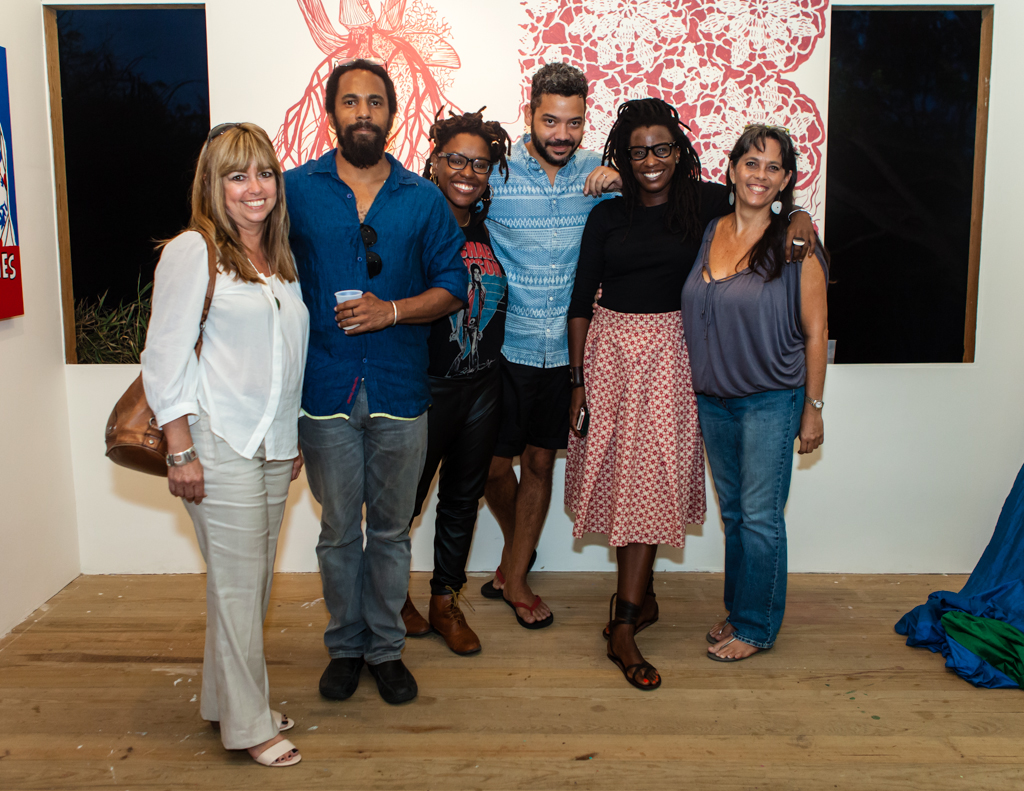
Photograph by Dondre Trotman

Photograph by Dondre Trotman

On Thursday June 26th, the Fresh Milk Art Platform hosted FRESH MILK XVI, the Barbados Launch of See Me Here: A Survey of Self Portraits from the Caribbean, edited by Melanie Archer and Mariel Brown of Robert and Christopher Publishers. Organised into a moderated panel discussion and an open Q & A, it was one of those rare times the second segment outran the first.

The event opened with a succinct presentation by visual artist Ronald Williams and my brief chat about Fresh Milk Books, before launching into the feature of the night: a conversation with See Me Here editor Melanie Archer and contributing Barbadian artists Ewan Atkinson, Annalee Davis, Joscelyn Gardner and Sheena Rose.

Skilfully moderated by Barbadian artist Russell Watson, dialogue revolved around the motivation and content of each artist’s unique self-portraiture, as well as the editors’ decision to compile an anthology with self-portraiture as its point of departure.

Annalee, Joscelyn, Ewan and Sheena’s responses were nuanced, embodying their personal expression of self and a distinct awareness of social identity as a political circumstance. In each case, their creative process reveals an understanding of this tension. For example, Joscelyn’s reflection on her work highlighted its ‘naïve’ perspective as she grappled to comprehend the complex racial and social climate of the Caribbean and being ‘white creole’. Similarly, Annalee shared her experience as being a white creole artist from Barbados, and the way in which Fresh Milk can be read as a self-portrait of this journey.

The more unapologetic, ‘socially vague’ visual art of Ewan and Sheena provoked especially provocative questions. As the discussion was opened to the audience, the question of self-portraiture as a zeitgeist of current Caribbean contemporary artists whirled into thoughtful questions and critically introspective answers. Major concerns expressed included the implications of this preoccupation with ‘self’ in today’s art practice, including the lack of a collective social agenda of current contemporary Caribbean art when compared to the socially oriented work of previous generations. Is this phenomenon indicative of an abandoning of ‘the national project’, or is it reflective of contemporary deconstructions of place as the root of one’s identity? How does this trend fit into the phenomenon of self-portraiture in general art history; is there a common social climate of these times?

In the context of contemporary mediated social media, the question of the performativity of art practice also raised poignant questions about the commodification of art, the role of the marketplace in the creative process, and criteria of authenticity: Who is the audience of this performance? How does this influence how, where and what we create? More importantly, what is the point of what we do? Should there be a point, anyway?

The mic was passed from artists, curators, scholars, students, men, women, the young, the older and the old. In a safe space for our perspectives to clash, clang and mingle, the night confirmed how much place does matter. In particular, the exchanges implied the radical potential of contemporary Caribbean art; more than ever before in the history of our region, we have the opportunity to create, control, consume and distribute perceptions of our visual and cultural identities. See Me Here signifies this moment—what comes next, we are not entirely sure.

Just after 9:30, Russell brought the lively conversation to a coherent close. Most of us stayed to mingle, purchase See Me Here, view the intimate exhibition and browse the CLRR. You wouldn’t guess that three hours before, FRESH MILK XVI was weary of the rain. Thankfully, Annalee and Katherine’s decision to host the night’s proceedings in the open space of the porch and lawn was magical. The atmosphere was relaxed and open, and the rain decided not to drench the projector or those of us sitting under the stars.

All photographs by Dondre Trotman 

Márquez’s Bolivar – #CCF

kwame ccf

The front cover of The General in His Labyrinth is a blueprint. Its red tiled corridor could be a path in the labyrinthine mental and physical journey of the novel’s main character—the 19th century figure who is known as ‘The Liberator’ of Latin America from Spanish colonialism—General Simon Bolivar.

This path runs through a series of arches that are decorated with tropical trees; two naked women sit in the curves of each arch. Multiple Bolivars in full military regalia can be seen pacing with their hands clasped behind their backs from one side of an arch to another, probably reflecting on his past accomplishments and failures. The Bolivar at the farthest end—at the vanishing point—seems to be attempting to walk backwards, towards the reader/viewer, as if considering a return to his former glory. I say ‘attempting’, because the shrinking of the protagonist seems to reflect Bolivar’s inevitable death. His return happens only through  his labyrinthine recollections of past victories and failures, of great friendships and betrayals, and his thirty-five passionate love affairs.

The above excerpt is from newest member of the FMB Team Kwame Slusher’s review of Gabriel García Márquez’s The General in His Labyrinththis week’s addition to the Fresh Milk Books Tumblr – the online space inviting interaction with our collection in the Colleen Lewis Reading Room.

For new Critical. Creative. Fresh reviews every week, look out for our #CCF Weekly posts and see the good reads we have available at Fresh Milk!

Video from FRESH MILK XV: The Age of Infobesity with McLean Greaves

We are pleased to share a video from FRESH MILK XV, held on Thursday, April 10th 2014,  which featured a talk titled ‘The Age of Infobesity’ by our visiting speaker McLean Greaves, a Barbadian-born, Toronto-based expert in digital media and Vice-President of the Interactive division at ZoomerMedia.

Thank you to the Caribbean Broadcasting Corporation (CBC), Barbados for recording the event!

The Age of Infobesity:

90 percent of the world’s data has been created in the past two years. With the rise of social media, mobile devices and the latest buzz — the Internet Of Things — humans are facing an unprecedented amount of data to consume. The result: a rapidly shrinking attention span.

Presented by veteran digital media executive McLean Greaves, this talk explains how we got here, the role of digital marketeers in monetizing reduced attention spans, and solutions for future generations where the average North American student now owns 6.7 devices but is increasingly forgetful.

A View from the Mangrove – #CCF Guest Review

mangrove

A View from the Mangrove is the final part of the late Cuban writer Antonio Benitez-Rojo’s Caribbean trilogy.  Like most of his work, this short story collection deals with the making of the “New World” both historically and in the formation of Creole identity. 

The eleven stories span several centuries.  The first ones bring to life historical chapters of the Caribbean as the “cockpit of Europe”, with European powers battling each other for a greater share of the loot. The first of these stories is a tale of the notorious slave-trader John Hawkins’s pursuit of Spanish gold.  Others involve French buccaneers, a Spanish governor sent to suppress autonomy in the colonies and of a reluctant priest trapped in this struggle.  A few centuries later, there is a human drama told by multiple narrators against the backdrop of the final stages of the Haitian Revolution, and later, an infirm and burnt-out soldier wasting away in a mangrove during the Cuban War of Independence.  The penultimate story is about Haitians fighting against Batista in the Cuban Revolution and against racism and exploitation at the hands of their comrades.  My favourite story of the collection though is “The Broken Flute,” on the last Tezcatlipoca; a tragic tale of an “old god” being swallowed up by the chasm that opens up when worlds crash.

The above excerpt is from an anonymous review by ‘The Book Guy’ of Antonio Benitez-Rojo’s A View from the Mangrovethis week’s addition to the Fresh Milk Books Tumblr – the online space inviting interaction with our collection in the Colleen Lewis Reading Room.

For new Critical. Creative. Fresh reviews every week, look out for our #CCF Weekly posts and see the good reads we have available at Fresh Milk!

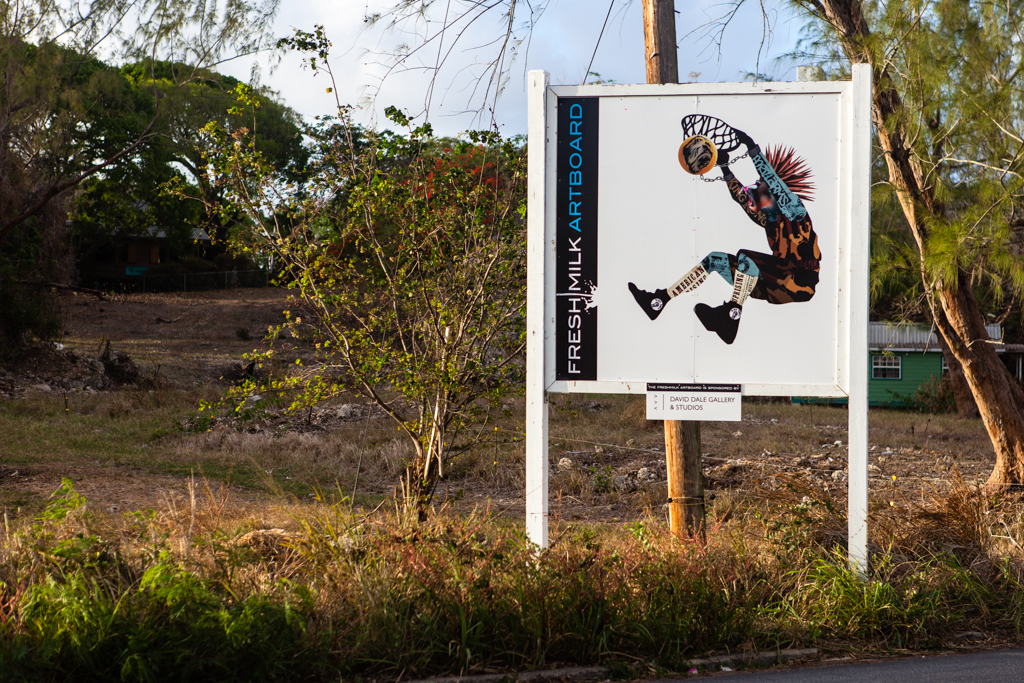
The Fresh Milk ArtBoard features Ronald Williams

IMG_7746

We are thrilled to have received the support to have a new image installed on our public gallery space, the Fresh Milk ArtBoard. Sponsored by the David Dale Gallery & Studios, Glasgow, we are now featuring the work of Barbadian artist and member of the Fresh Milk Books team Ronald Williams. Ronald’s work will also be on display in Glasgow this July-August as part of Fresh Milk’s component of the International Artist Initiated project.

As part of The Glasgow 2014 Cultural Programme, the David Dale Gallery will present International Artist Initiated, an ambitious collection of events and exhibitions to coincide with the Commonwealth Games. Working with artist initiated organisations from across the six Commonwealth territories, including Fresh Milk, the programme will consist of a series of projects by the invited organisations which respond to the context of the Commonwealth Games within Glasgow, and is representative or indicative of contemporary culture within their nation through the lens of artist-led organisation.

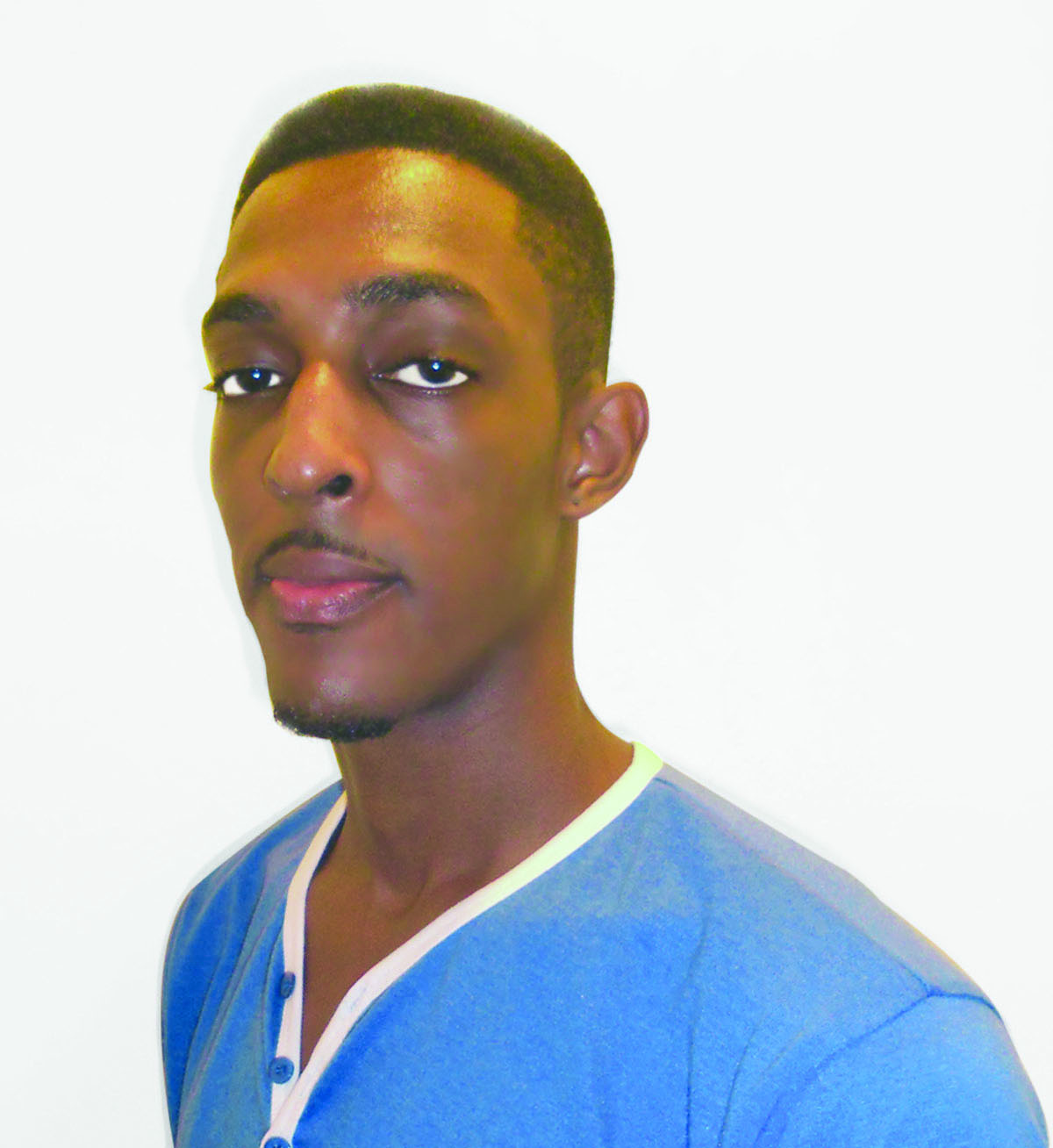
portrait

Ronald’s Artist Statement

Inspired by the dynamism and power of Shaquille O’Neal’s Dunkman logo; as well as his legacy of being one of the most aggressive, combative and dominant players in the NBA’s history, ‘The Beast’ is my expression of the “black male-brute” stereotype.

Using the original logo as a template, I collaged photographs, various images found in popular media and historical texts via Photoshop to form the final piece. While it was not necessary for the viewer to know which athlete a piece is inspired by, that knowledge of the athlete was critical in my selection of the images to use. For ‘The Beast’, intuitive decisions were made based on my perception of O’Neal and his presence as a cultural icon.

shaq_dunkman_logo

Conceptually, ‘The Beast’, like many other collages, is deliberately self-contradictory. Slave revolt texts and upraised fists are counterbalanced by shackles still intact, while the iconic black power symbol when placed on the shoes becomes an ironic brand worn by the primate character.

Through these symbols I acknowledge the important role basketball, and by extension sports, has played in bridging social and economic gaps while also criticizing how the system is set up. The image of the black male being less than human—a big, powerful animal—is one we have struggled to erase, yet the narrative of the NBA has constantly reaffirmed this. Blacks are generally praised for their athleticism, strength and physical qualities while the most lucrative deals and sponsorships usually go to the black basketballers who best exhibit these traits.

As the character in ‘The Beast’ is shackled to what is effectively his own image, I fear some part of the “black male-brute” stereotype is ingrained in our psyche. Many black basketballers voluntarily embrace being a beast on the court while the sports and media industries eagerly promote these images. It’s a catch-22 situation; as we have bridged many racial gaps, we have also unintentionally reaffirmed misguided stereotypes.

IMG_7745